
The Baix Empordà, "The Tuscany of Spain"
Everyone's heard of the Costa Brava. Not enough have heard of the Baix Empordà, the region in which part of the Costa Brava lies. This is why there is much more to the region than the coast, (although the coast is breathtakingly spectacular!).
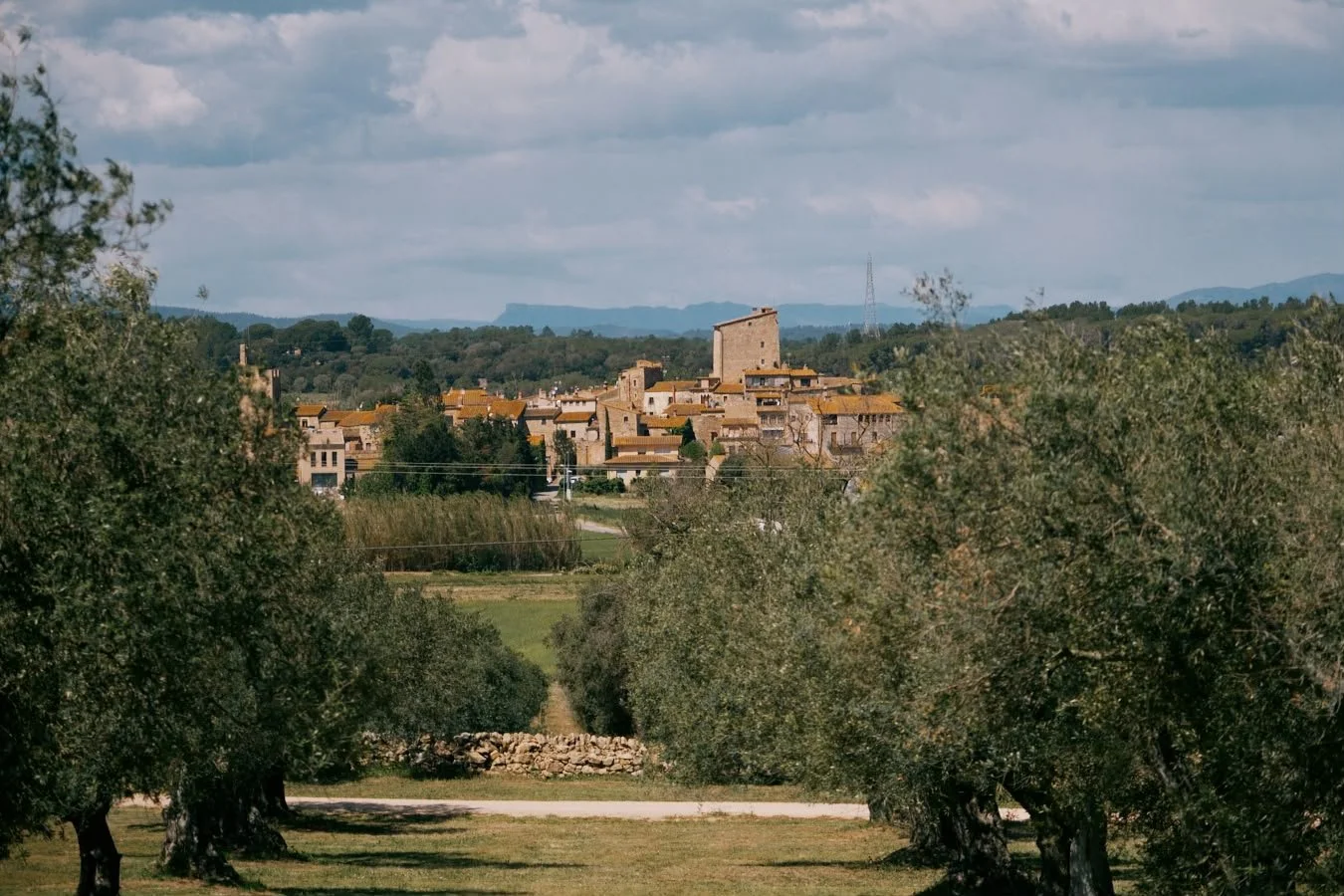
Palau Sator, one of the Baix Empordà’s most beautiful villages.
Roll away from the coast and you are driving through beautiful countryside, with the silhouettes of the spires of the churches of scattered villages adorning every undulation. The whole mood shifts. The crowds thin out, the pace drops, and suddenly you're winding through honey-stone villages that look like they've been carved out of a Renaissance painting. People have been calling it "the Tuscany of Spain" for years, and once you're standing in the main square of Peratallada at golden hour, you'll understand why. Medieval walls, cobbled lanes too narrow for cars, ivy creeping up 900-year-old stone: it's the kind of place that makes you lower your voice without meaning to.
There are many cobble stone villages. Pals, Peratallada, Monells, Ullastret & Palau Sator being a few of our favourites. Each one a tiny fortress of stone houses, arched doorways, and squares built for lingering over a coffee. There's no headline attraction to queue for. The village is the attraction. You just wander. Get lost and enjoy the lack of wifi.
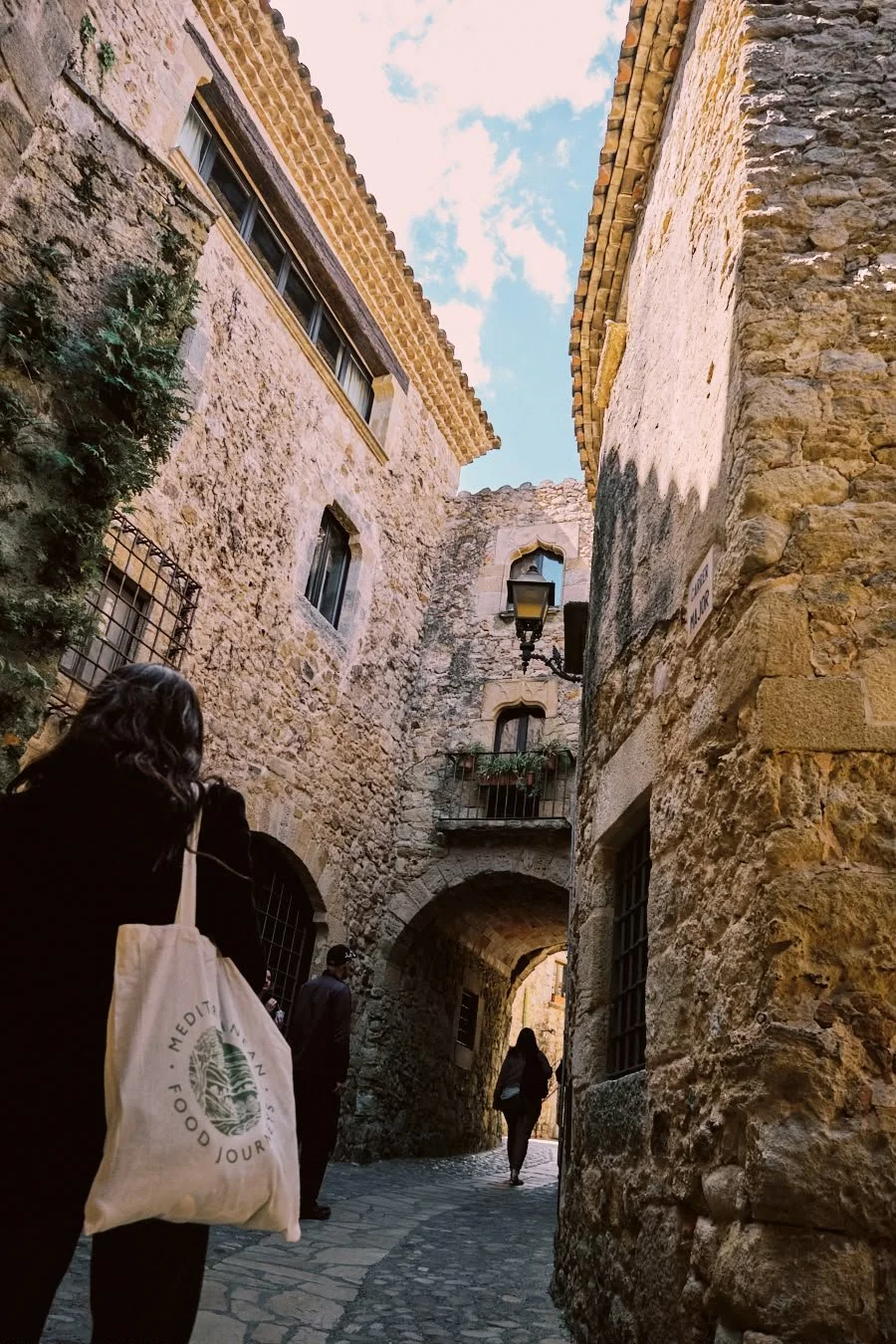
Wandering the golden stoned streets and walls of Pals
The Baix Empordà is also known for its style, houses are adorned with a uniquely ´Empordà' interior design - modern meets rustic, think straw baskets and terracotta tiles in different shapes and sizes alongside antiques that all tell a story. La Bisbal d'Empordà has been a ceramics town for centuries, and it shows. Workshops line the main road, kilns still fire in back rooms, and the glazed pottery here has a warmth and heft that mass-produced stuff never quite gets right. The town also houses some of the best antiques shops in Catalunya.
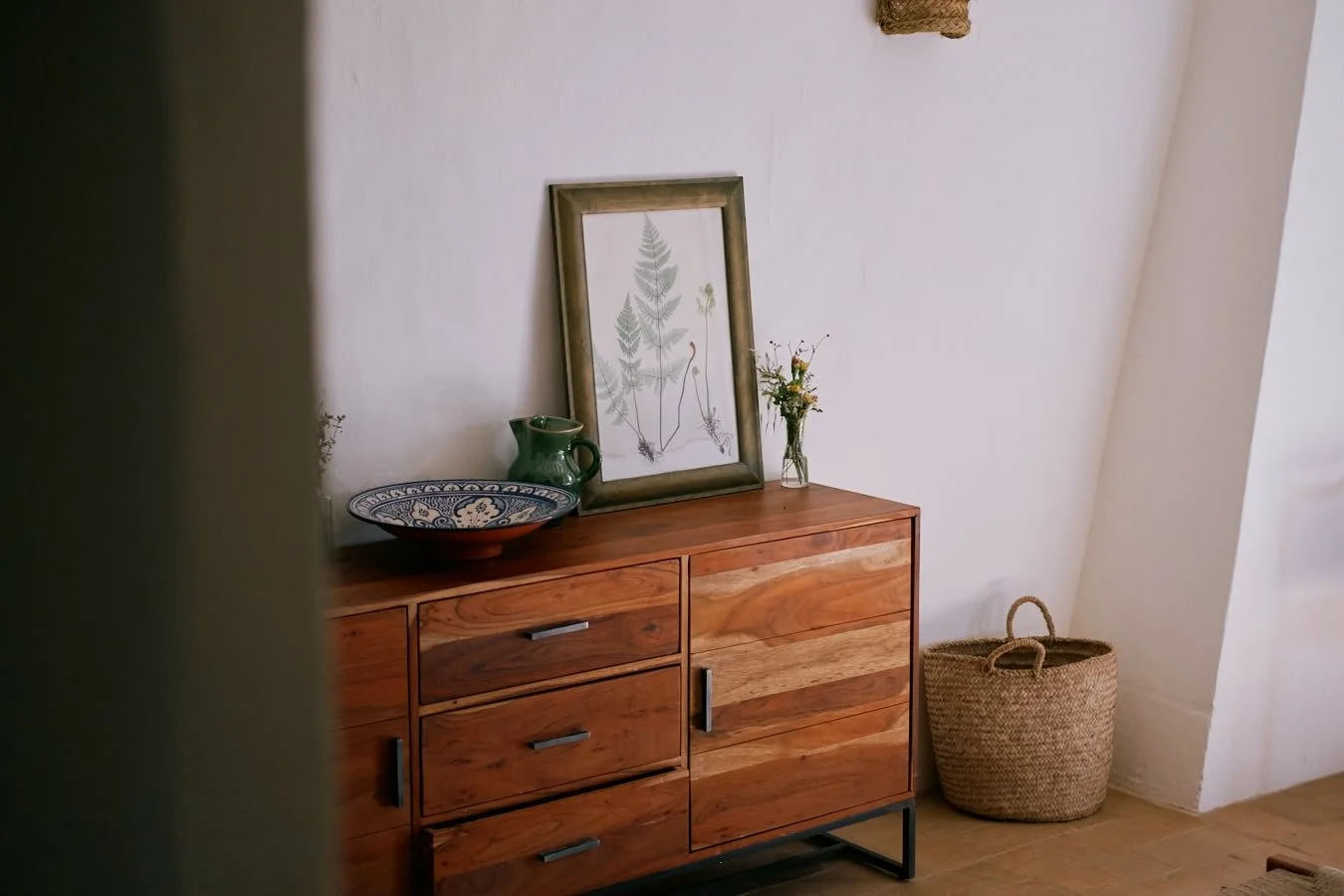
Timeless style of the Empordà: woven ‘cestas’, ceramics and antiques
Vineyards, orchards and rice fields roll out from the village walls, fields of sunflowers turn gold through summer, and the Gavarres massif keeps everything green and wooded on the horizon. Drive or cycle between villages and you're constantly crossing farmland, cork oak forest, and the odd stretch of wetland, all of it stitched together by cypress-lined lanes and a softness of light painted and photographed by many artists. It's the backdrop that makes the whole region feel unhurried, and the reason chefs here never have to look far for what to put on their plates.
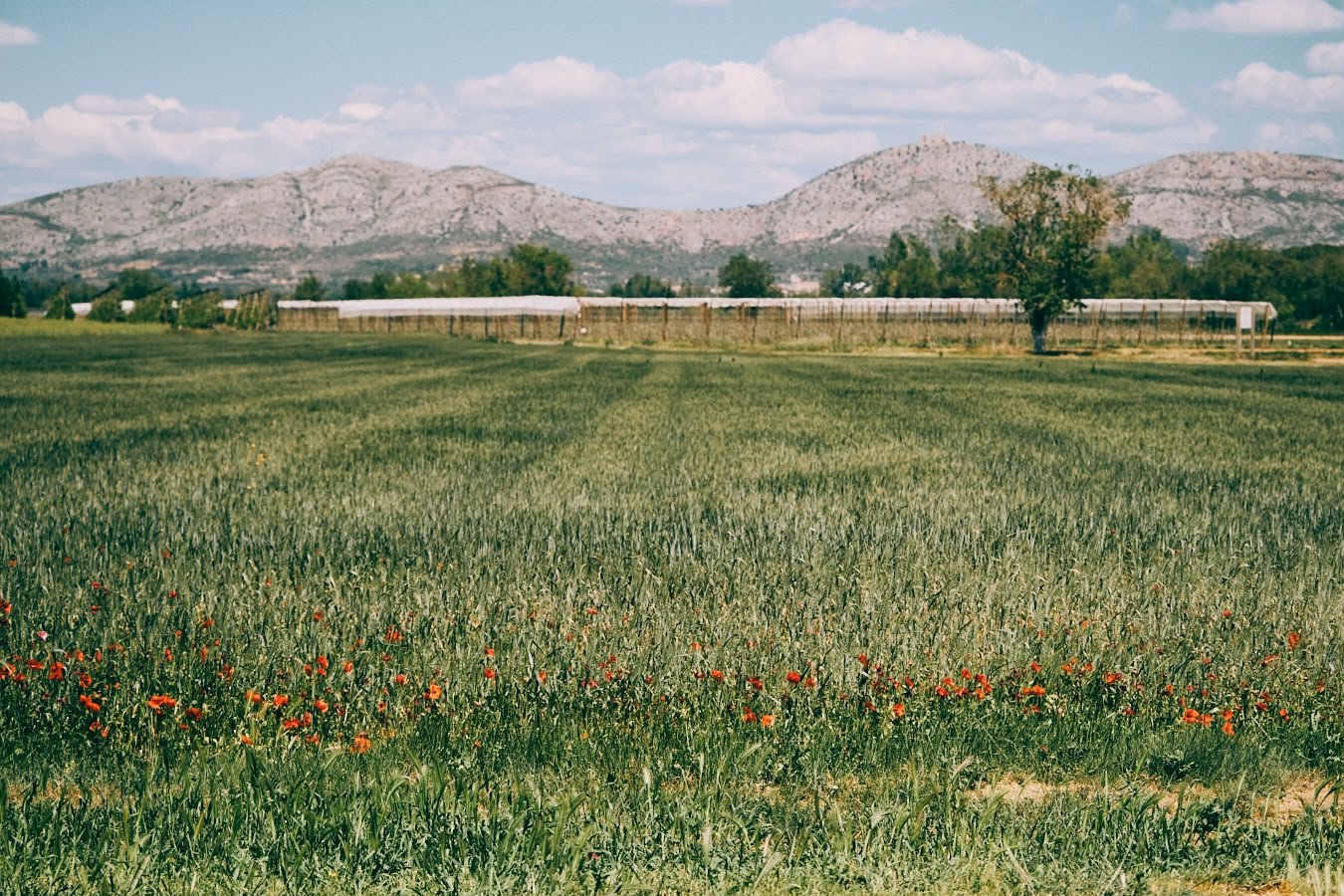
The fortress of Montgri looming over the gentle fields.
Unsurprisingly the food is also vast and high quality with multiple Michelin stars tucked into villages you'd otherwise drive straight through, alongside no-frills masias serving arroces, suquet and market vegetables that were in the ground that morning. You can eat well without trying particularly hard.
The wine of the Baix Empordà are part of the DO Empordà which also includes the Alt Empordà (Baix means low and alt means high). There are more winemakers in the Alt, but also some fantastic wines coming from the Baix.
The traditional grapes are reds built on Garnatxa (Grenache) and Samsó (Carignan), and whites on Garnatxa Blanca, Muscat, Macabeu, and Xarel·lo, plus the region's two native sweet wines, Garnatxa de l'Empordà and Moscatell de l'Empordà. Many winemakers have also leant into classic French grapes so we are starting to see more Chardonnay, Syrah, Cabernet Franc and Cabernet Sauvignon. Our favourites are the wines of Clos D’Agon, Mas Oller, and Vinyes d'Olivardots.
What ties it all together is the pace. No beach-town hustle, no stag-do noise, no queue for the "iconic photo spot." Just stone, ceramics, good wine, and long lunches. If the coast is where Catalunya performs for visitors, the Empordà is where it quietly gets on with being itself.
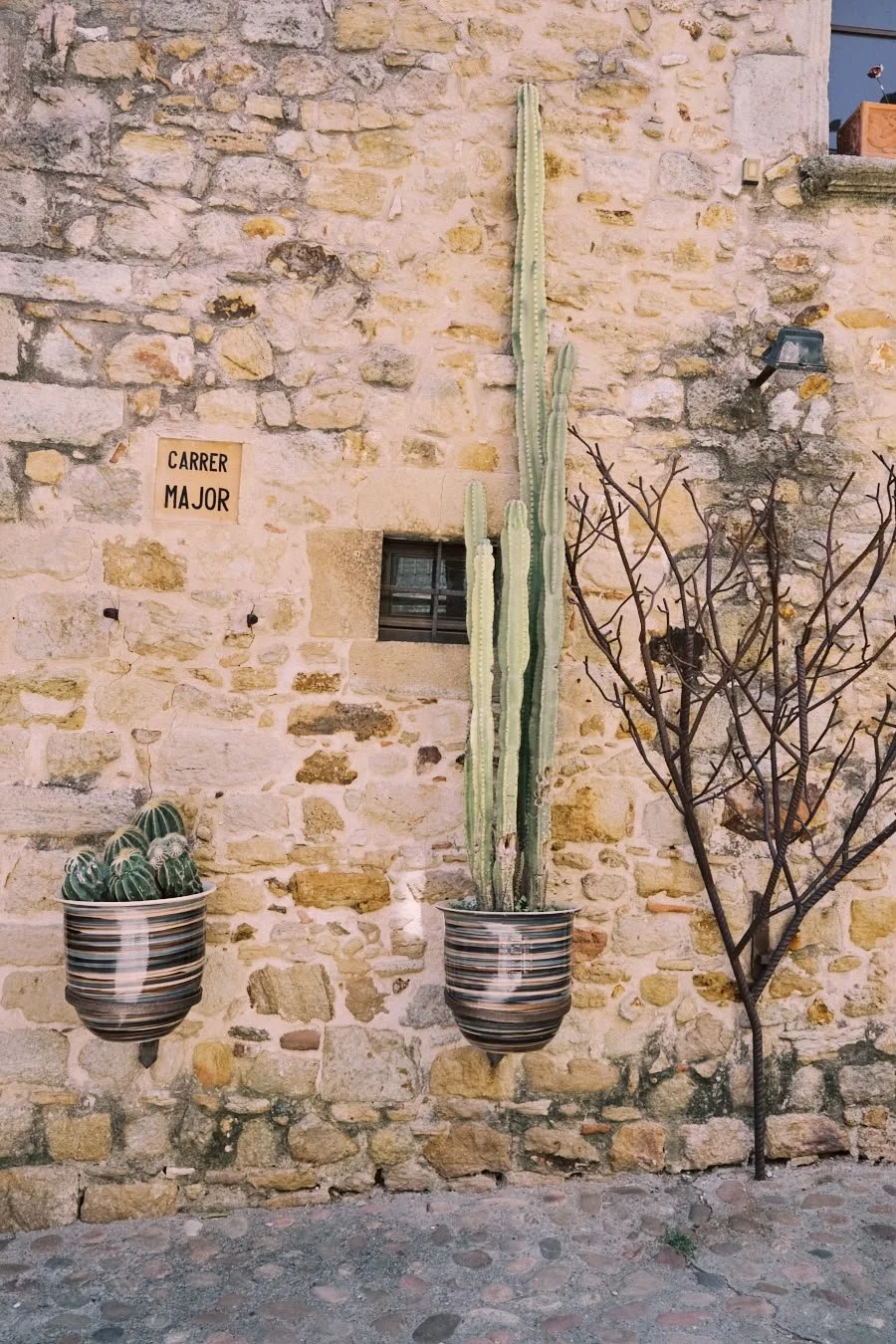
Artisanship and showmanship on the streets of Pals.
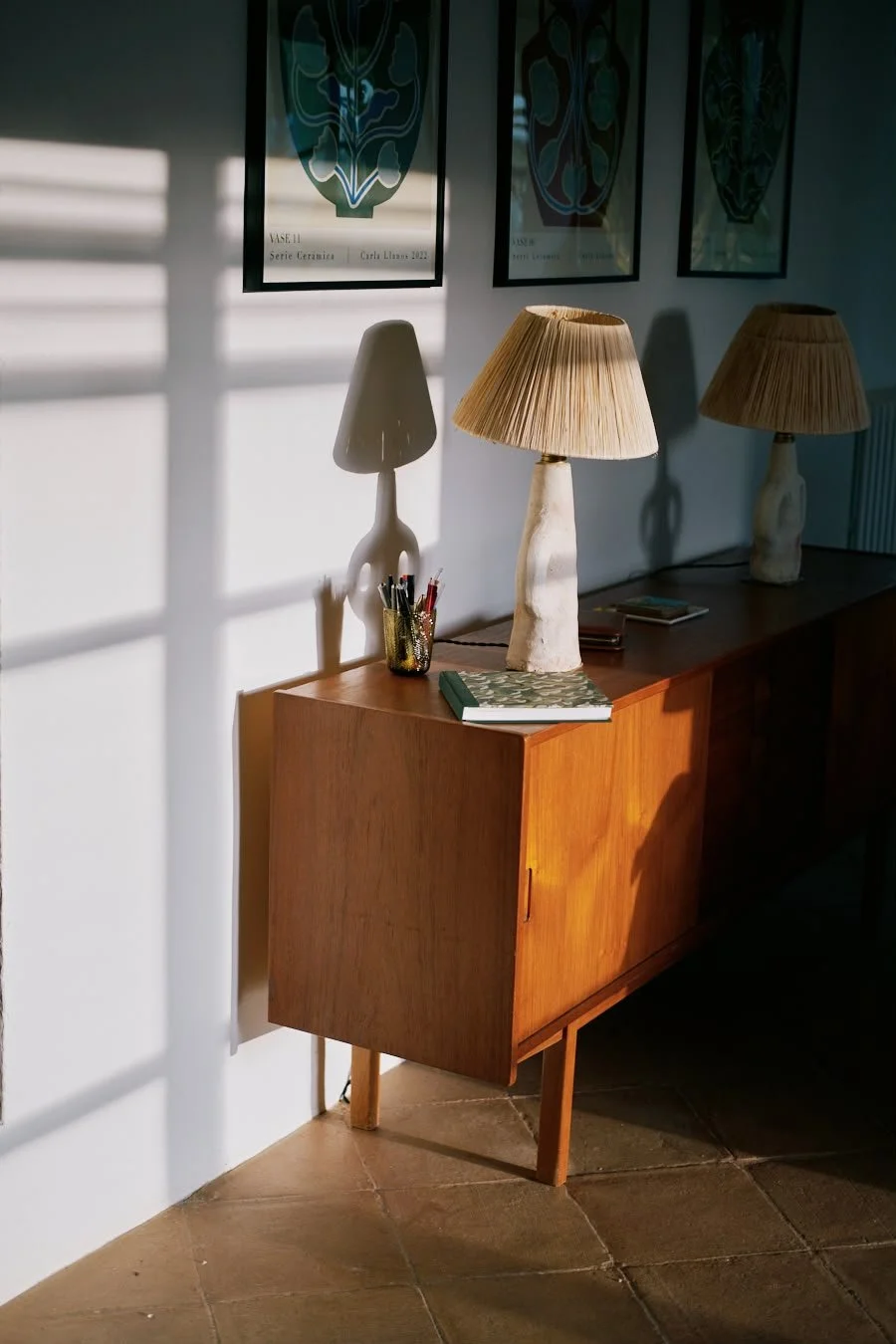
Soft ceramics and more antiques.
