
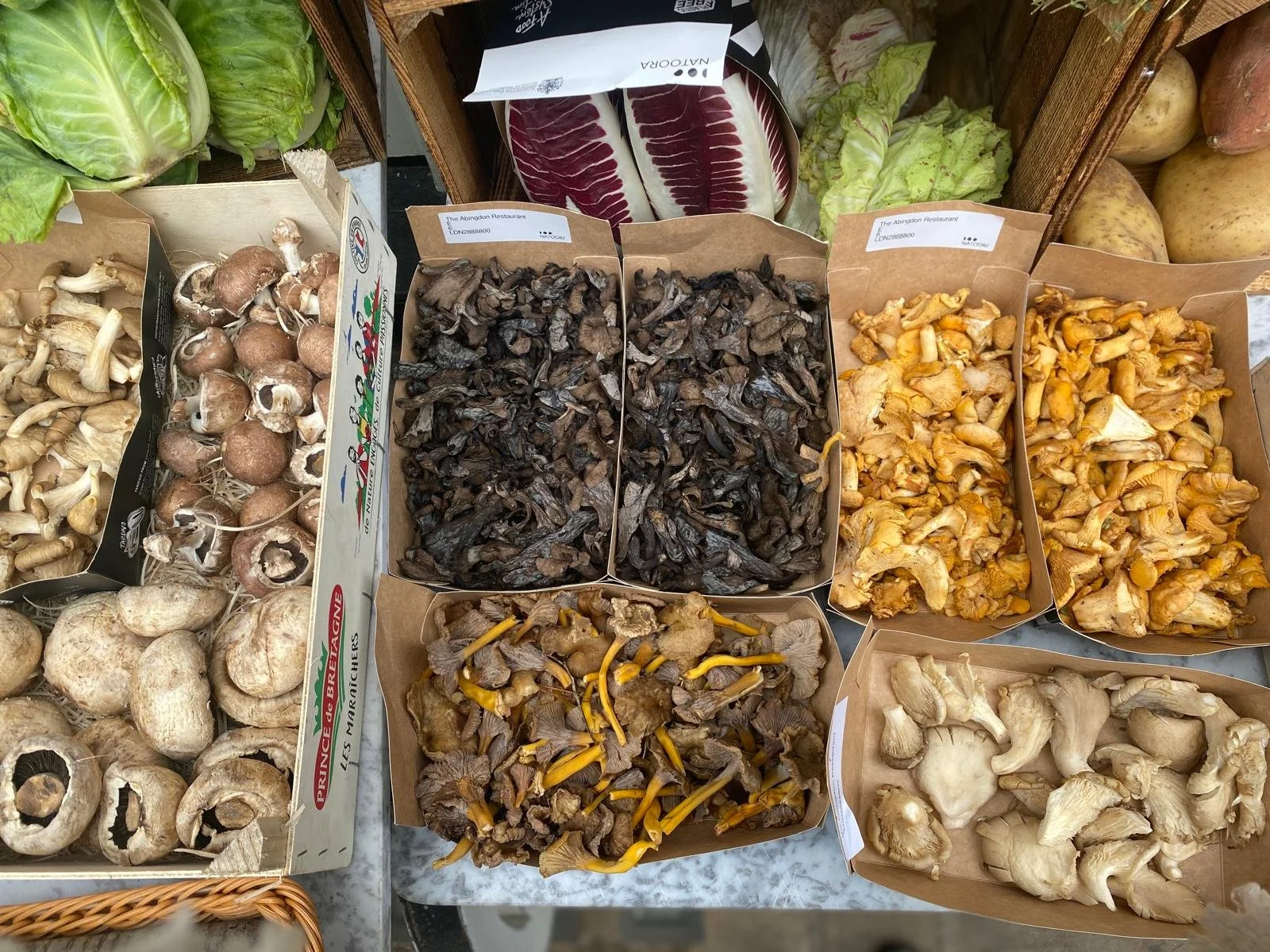
The mushrooms have arrived. It takes two weeks after long sustained rains for the mushrooms to start fruiting. After three, they are all over the forest floors. All around the Northern Mediterranean, baskets of rovellons (saffron milk cap), ceps (porcini) ou de reig (caesars) and rossinyols (chanterelles) are coming out of the woods, into kitchens and onto tables.
With them returns one of the region's best-loved rituals: an early start, a wicker basket, a small knife, and a walk in the woods while the ground is still damp. Many people think of tomatoes, grilled fish and a cold glass of white wine when they think of Mediterranean food, but this only tells half the story, the reality is more vast, seasonal, and complex. Mushrooms are a fine example: raw, fried, grilled, stewed, folded into rice, pickled or dried for the months ahead, they are one of the great pillars of the Mediterranean autumn table.
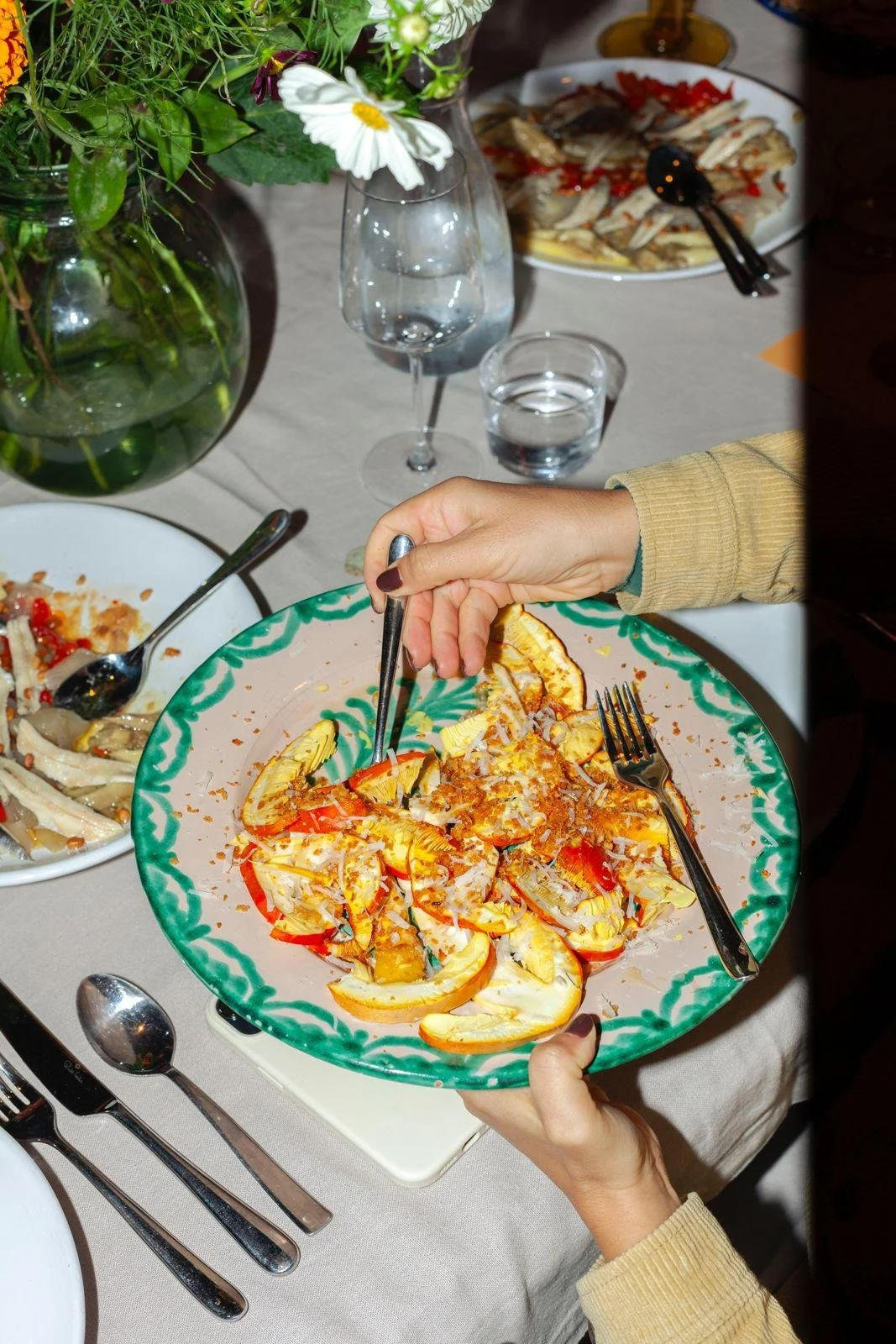
Ou de reig carpaccio with parmesan and pangritata
From a culinary perspective mushrooms bring a unique earthiness, although hopefully not because they still have earth on them! They are also a fantastic way to add umami to dishes, either fried, roasted or dried. We also really love their flavour when raw, which reveals a nuttiness, and an almost cucumber like crispness.
One interesting mushroom fact: you can’t overcook them in the same way as meat or vegetables. They are funghi, unique in the culinary world, and their cells are held together by chitin, rather than pectin as in fruit and vegetables. You can cook them for hours in a stew and they won’t go mushy and will retain their bite. They are 90% water, so make sure that they are not overcrowded in the pan, or their high water content can inhibit browning. Cook to remove some of that water to intensify their flavour, but not to the point of leatheriness, keep them juicy!
Here are three very simple mushroom recipes for you. We served these as a trio at a retreat last month, and they went down a storm. It is lovely to experience the flavour of mushrooms in different ways with different cooking techniques applied. In this case: sauteed with a picada, quick pickled and carpaccioed (I’m also quite pleased with that verbing).
Sauteed rovellons with hazelnut picada: earthiness and nuttiness along with mushrooms best friends - garlic and parsley
Quick pickled mushrooms: one way to preserve the fun guys, which also sharpens their flavour.
Porcini carpaccio with lemon, parmesan and pangrattata: freshly cut raw mushroom has a particular taste that we love, and also soaks up a dressing, in this case Italian style.
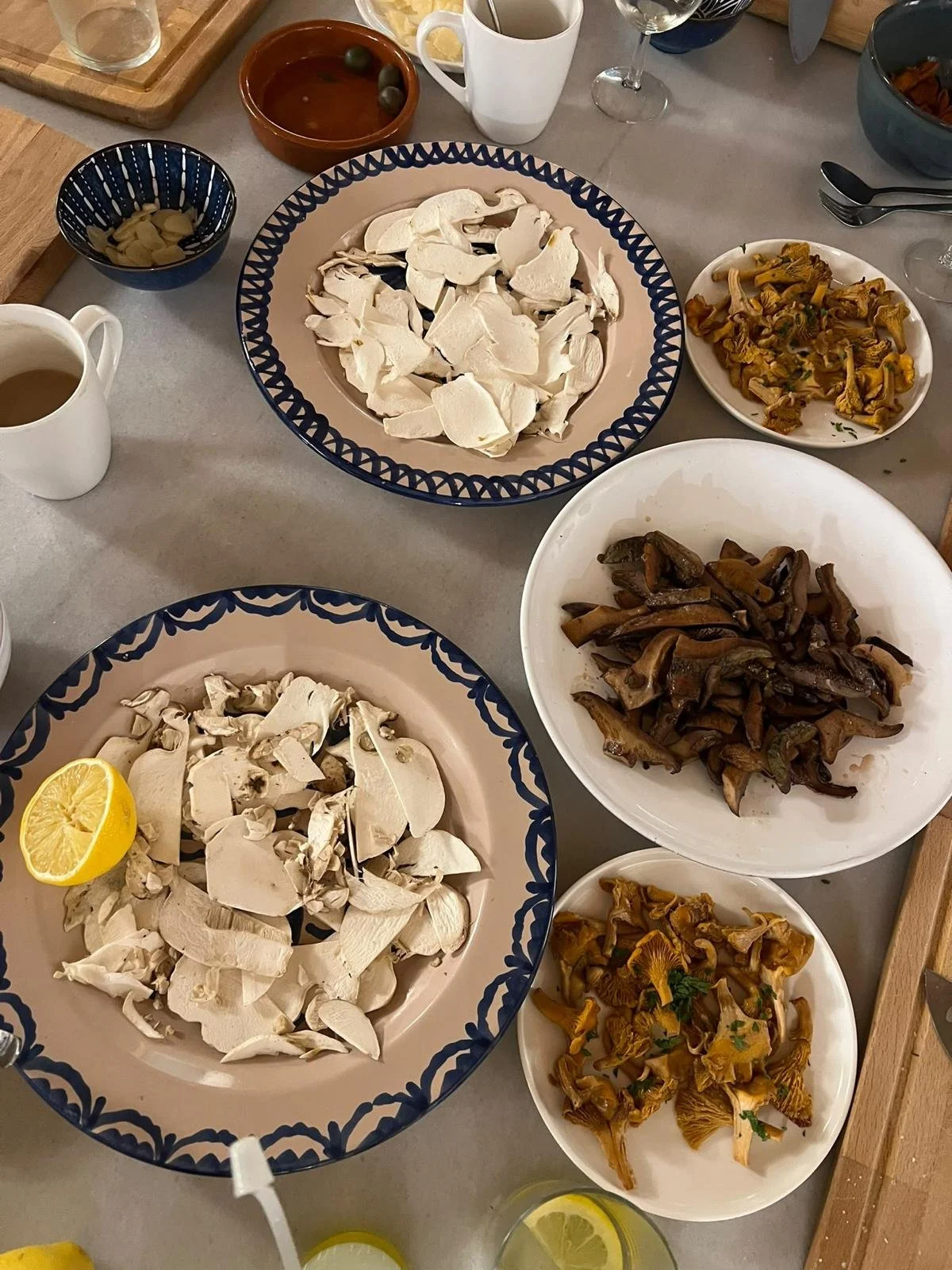
Porcini finely sliced, chanterelles ready to be pickled, and rovellons ready to be fried
Picking safely and responsibly
The forest's generosity comes with rules, and the first one is absolute: never eat a wild mushroom unless you are completely sure what it is. Some of the most dangerous species, such as the death cap (Amanita phalloides), grow in the same woods as the edible ones, and some popular varieties have dangerous false friends. If in doubt, leave it in the ground.
A few habits protect both pickers and the woods:
Build your confidence by investing in a walk with a professional forager or find a friend that is a confident identifier
Use a wicker basket, not a plastic bag, so spores can fall as you walk and mushrooms don't sweat.
Cut or gently twist each mushroom at the base, and leave small and old ones behind.
Don’t overharvest a spot, leave some for the animals and other mystical forest creatures