
‘Meet the Makers’ - Maren Termens, Flower Farmer, Horta de la Viola
This is the first in our ‘Meet the Makers’ series, celebrating artisans and makers around the Mediterranean, and particularly close to home in and around the Costa Brava. The series will take the format of a short biography followed by a short interview, along with some photos and links to their work. We want to celebrate those with a particular passion for their chosen craft. Those that think, and those that are creative as well as hard working.
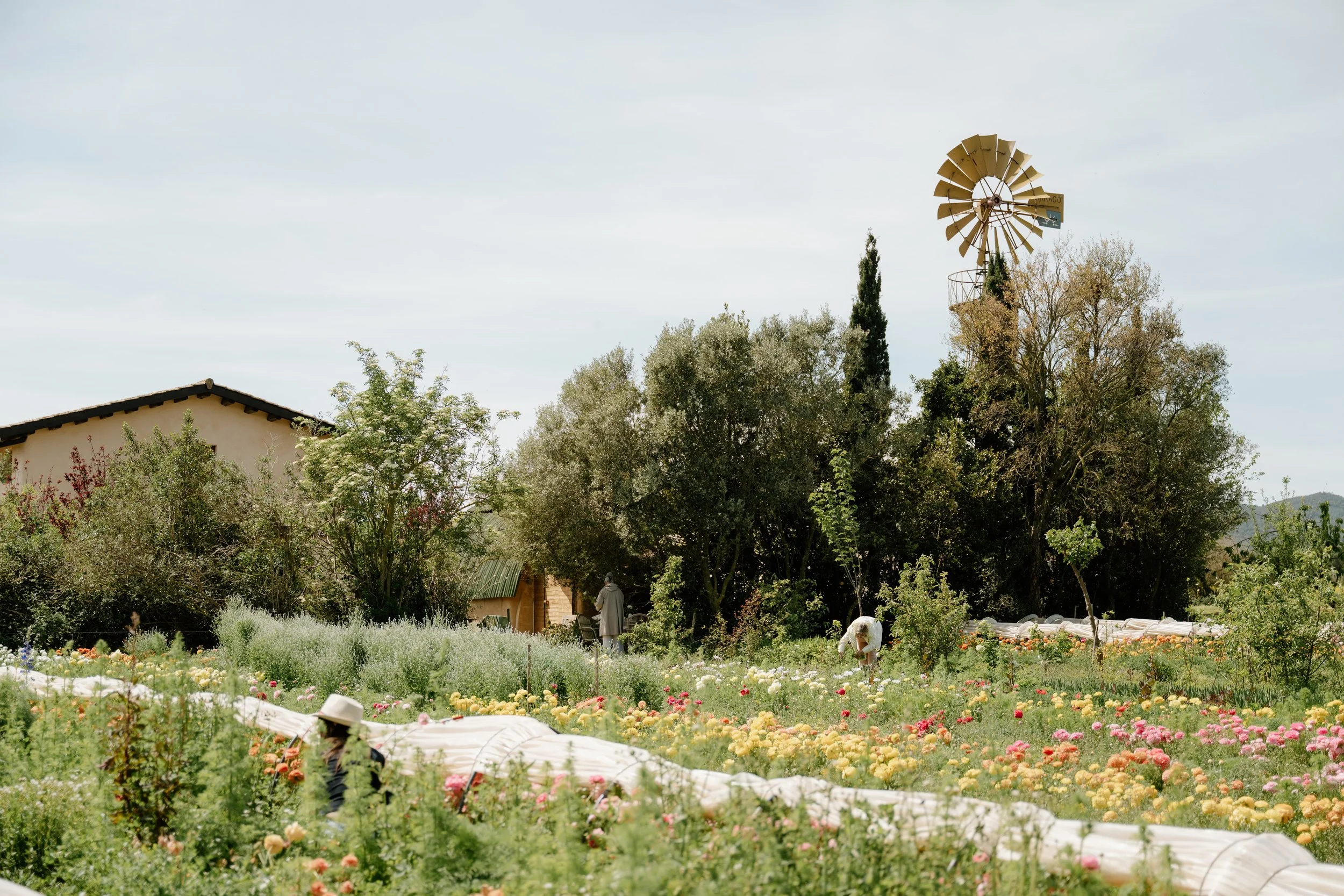
Maren Termens is such a person. She runs Horta de la Viola, a 14,000 sqm flower farm in Llofriu, Catalunya. We like to use her flowers for the tables and bedrooms on our retreats, and for the tables of our private catering whenever we can. The flowers have an elegant rustic organic feeling to them. They are all grown outside, amongst the elements, rather than uniformly in a polytunnel. This gives them both character and personality, which one can feel in their presence.
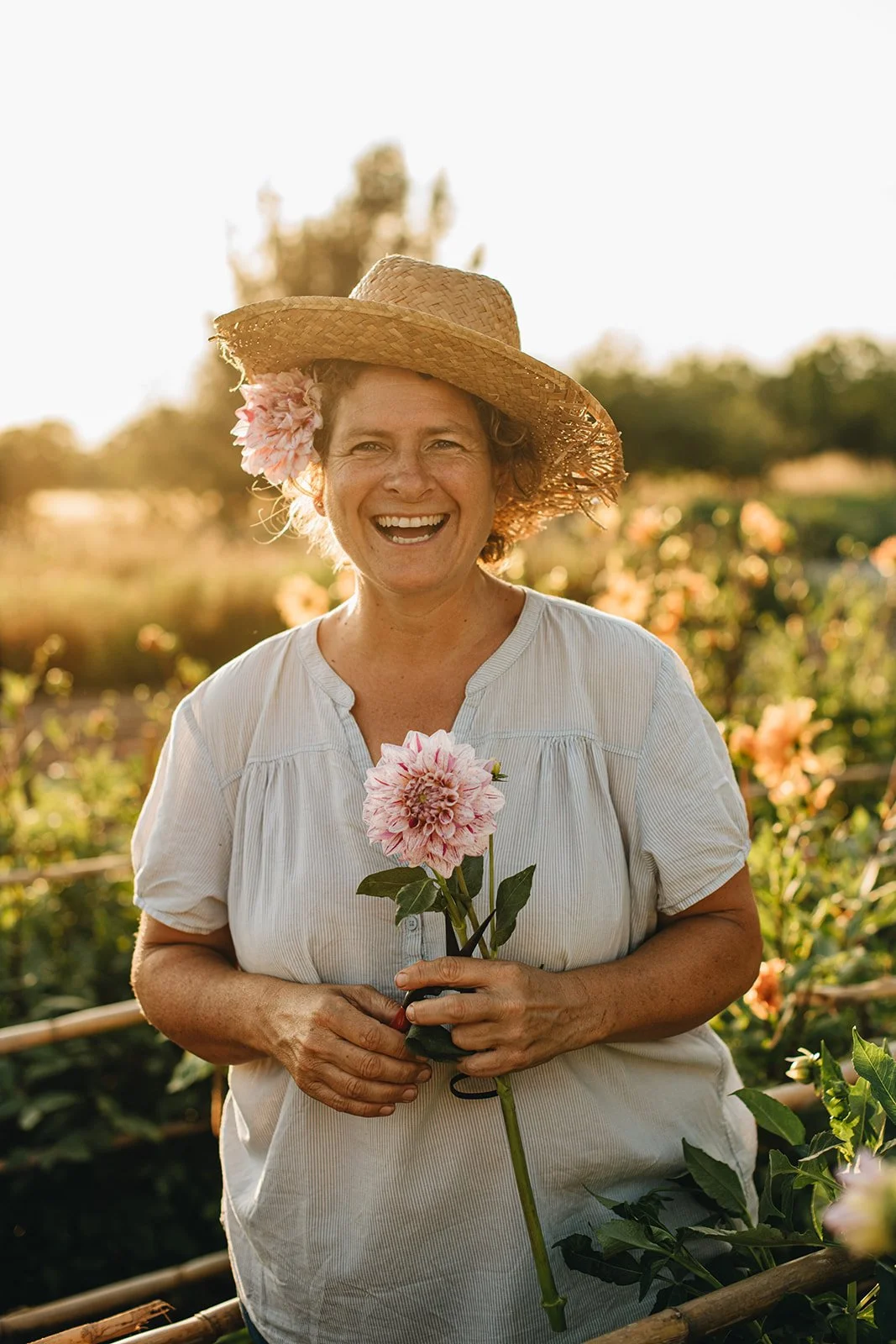
Maren worked as an architect in Barcelona for many years before finally committing to her true dream of becoming a florist 10 years ago. She studied in the US at Floret and in the UK with Green & Gorgeous before transforming the family vegetable farm into a flower farm, alongside her husband Raimon Costa, and her daughter Violeta. There is a poetry in her words in striving to grow flowers that are “different, beautiful, with curves and their lovely imperfections” because of “their behaviour in a vase, and their ability to express the character of each season”. Read the full interview below.
Her work as an architect was not wasted time. The spaces and structures at Horta de la Viola are beautiful too, many built using sustainable construction techniques using straw and clay. She even wrote a book on the subject: Casas de Paja: Una Guia Para Autoconstructores (Straw Houses: A Guide for Self Builders).
She is candid that the florist trade is often managed as idyllic, but is actually very demanding. High season runs from March to October, and a flower takes 120 days from seed to bloom. The off season is filled with weeding, clearing and planting.
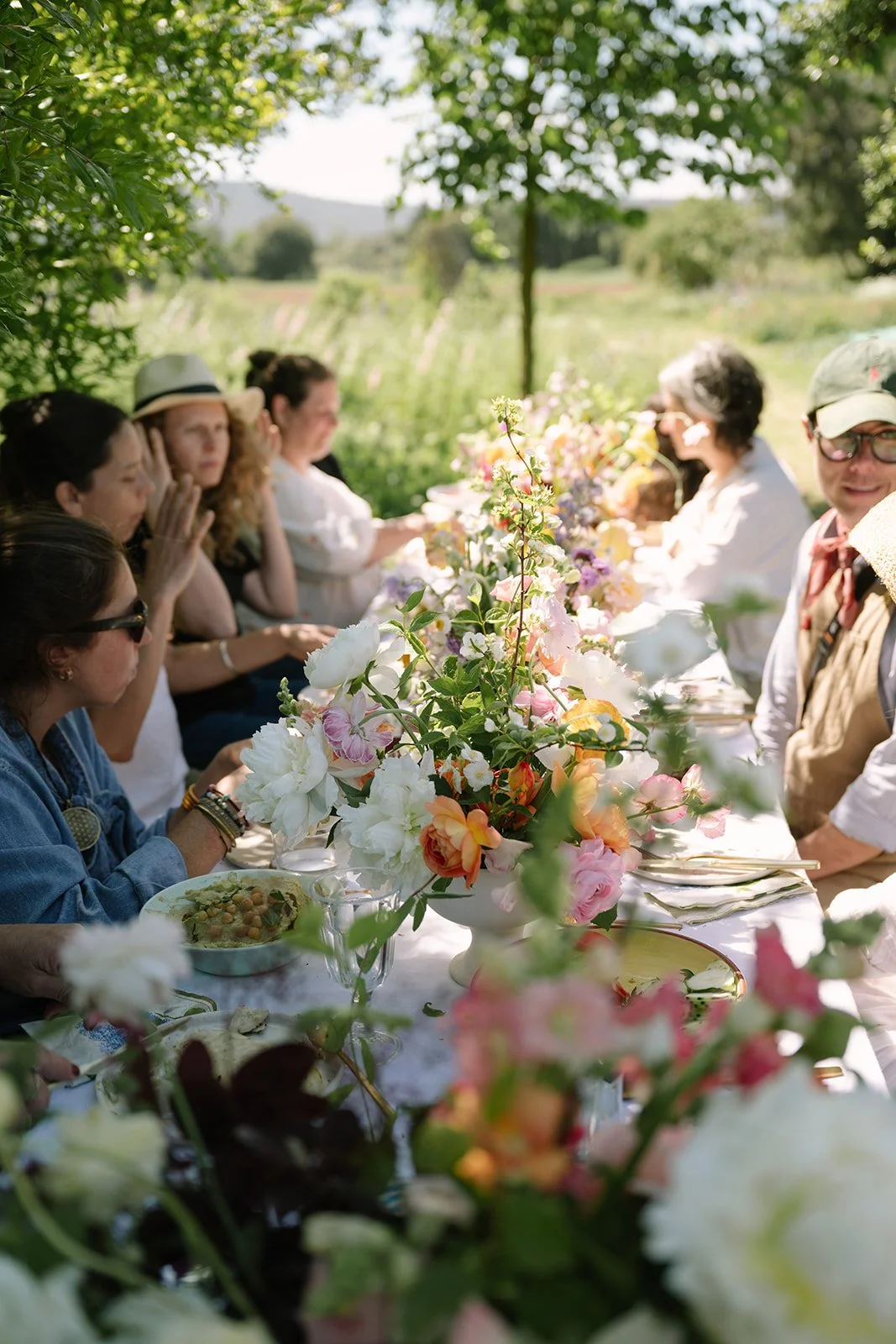
The farm now runs organic floriculture courses, floral art workshops, guided visits and dinners amongst the flowers, as well as hosting photoshoots. They sell their cut flowers directly, and also love to create floral displays for weddings, funerals, birthdays and all other manners of celebration.
Here’s the interview:
What's the story behind Horta de la Viola? How did you start growing flowers, and what drew you to this particular land?
L'Horta de la Viola was born from the need to move from theory to practice—from dreaming to something tangible. My partner, Raimon, studied Environmental Sciences, and I studied Technical Architecture. He committed to organic farming, or more precisely, agroecology, which also includes social and environmental care aspects, and I put bioconstruction into practice on the farm.
Raimon led the vegetable production project for more than 18 years, and I worked as a technical architect. Eventually, with great sadness, we decided to leave agroecological vegetable production behind because of the difficulties it involved, and I left technical architecture because I had become a mother and no longer wanted to travel.
Flowers were present from the very beginning at l'Horta de la Viola, as silent companions attracting pollinators for our vegetables. But I always loved flowers, and they gradually took over the farm - I kept planting more and more. In fact, I always wanted to be a florist, but I didn't arrive at that trade directly; I took a detour before finally devoting myself to what I truly wanted.
I wanted flowers that were different, beautiful, with curves and their lovely imperfections - and that's only achieved by growing them outdoors, at the mercy of the weather.
I also wanted to restore the value of seasonal flowers, grown with respect for nature and with their own identity. It's a project that has grown and transformed slowly, has put down deep roots, and has united agriculture, creativity, and sustainability, proving it was possible to produce flowers in a different way.
We chose this land because it has extraordinary conditions. We're in the Baix Empordà, very close to the Mediterranean Sea, where the light, the sea breeze, and the climate produce flowers with a very distinct personality. It's also a farm with its own agricultural history - Raimon's uncle used to farm it - and it was important to me to bring it back to life by cultivating it in a way that respects the soil and its surroundings.
Horta de la Viola isn't just a flower farm; it's a place where nature sets the pace and where every season offers something different.
How does your growing method (organic practices, soil care, variety selection) shape the character of the flowers - their scent, color, and lasting quality?
Our growing method has a direct impact on the quality of every flower. We follow principles of regenerative and organic agriculture, taking special care of soil health, because we believe a living soil produces stronger, more balanced plants.
We select varieties for their beauty, their behavior in a vase, and their ability to express the character of each season - beyond productivity, at least for some varieties. Many of them aren't found in commercial channels precisely because we prioritize personality over agro-industrial uniformity.
Flowers grown this way have a great deal of character. And because we harvest them at their optimal moment and they travel very few kilometers to reach their destination, they retain a vitality that's hard to find in imported flowers.
Is there a flower or floral arrangement you feel especially connected to this place or to local tradition? What makes it special?
I can't pick one flower to represent Horta de la Viola, because what the farm represents, precisely, is diversity. Each variety has its own distinct personality, and together they create an enormous range of shapes and colors.
As for floral arrangements, I feel especially drawn to natural-looking designs, where the flowers seem to keep growing freely, as if they'd just been picked from the field. I like each arrangement to reflect the landscape around us: wild textures, grasses, branches, the movement of the wind, and the Mediterranean light.
More than reproducing a specific tradition, we try to reinterpret the landscape through flowers.
When guests from our retreats visit the farm, what would you like them to take away from the experience?
I'd like them to discover that behind a bouquet of flowers there's much more than beauty. There's time, observation, work, patience, and a very deep relationship with nature. I want them to appreciate that behind something as fleeting as a single flower stem lie months of work and care. And that it's precisely because it's fleeting that it holds so much value. It's something precious you can only keep in the memory of that flower or, at most, in a photograph that managed to capture its beauty.
I hope the visit lets them slow down, look calmly, and reconnect with natural rhythms - something we often forget in everyday life. I want them to be able to walk among the flowers, learn how they're grown, understand why each season has its own charm, and experience the privilege of cutting their own flowers directly from the field.
If, by the time they leave, they value farming, biodiversity, and seasonal flowers a little more, I'll feel the experience has fulfilled its purpose. And above all, I'd like them to leave with the feeling of having visited an authentic place, where every flower tells a story and where nature remains the true protagonist.
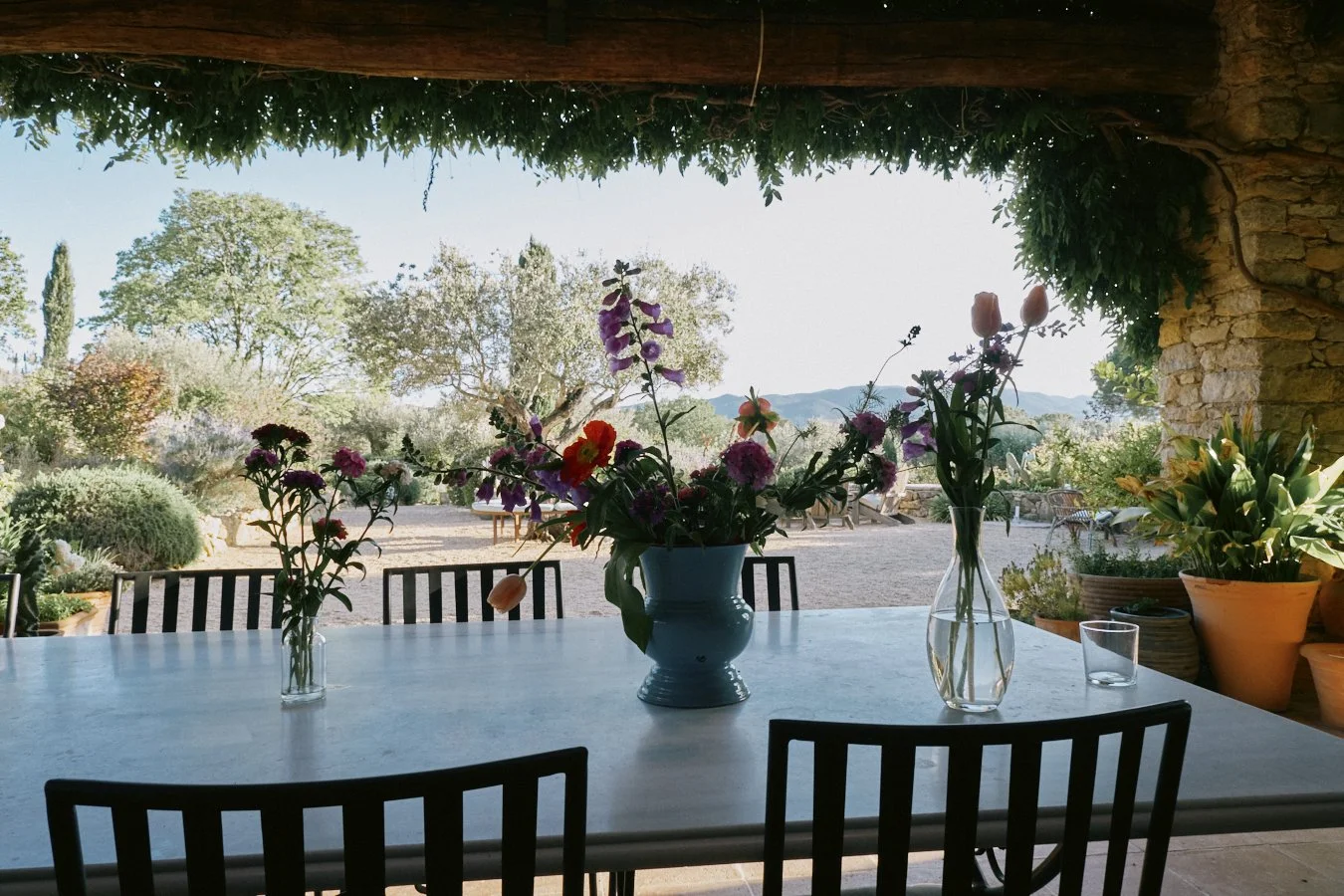
Maren´s flowers at Torre Ronsat estate.
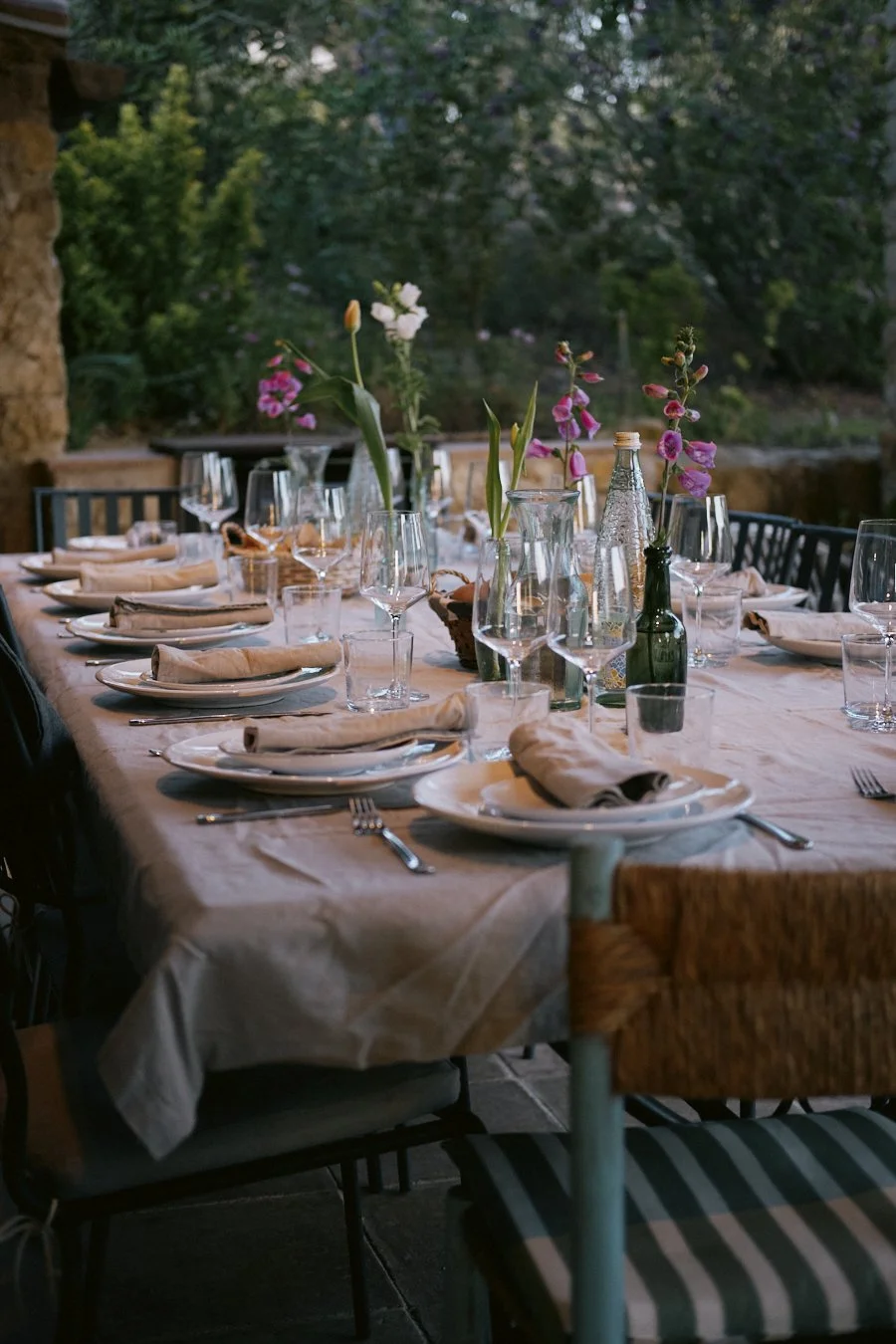
A few beautiful flowers on the table.