No Knead Overnight Focaccia Barese
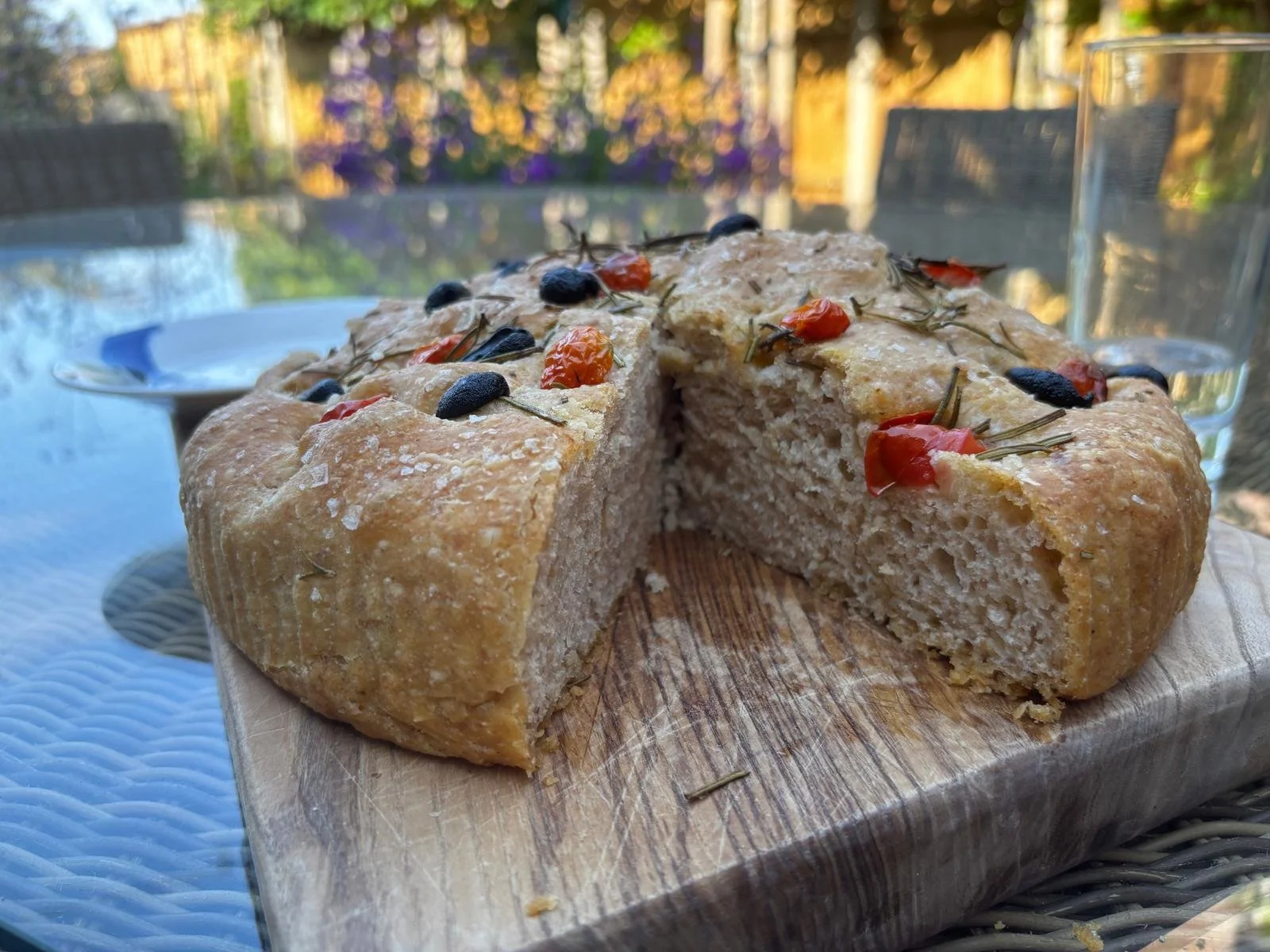
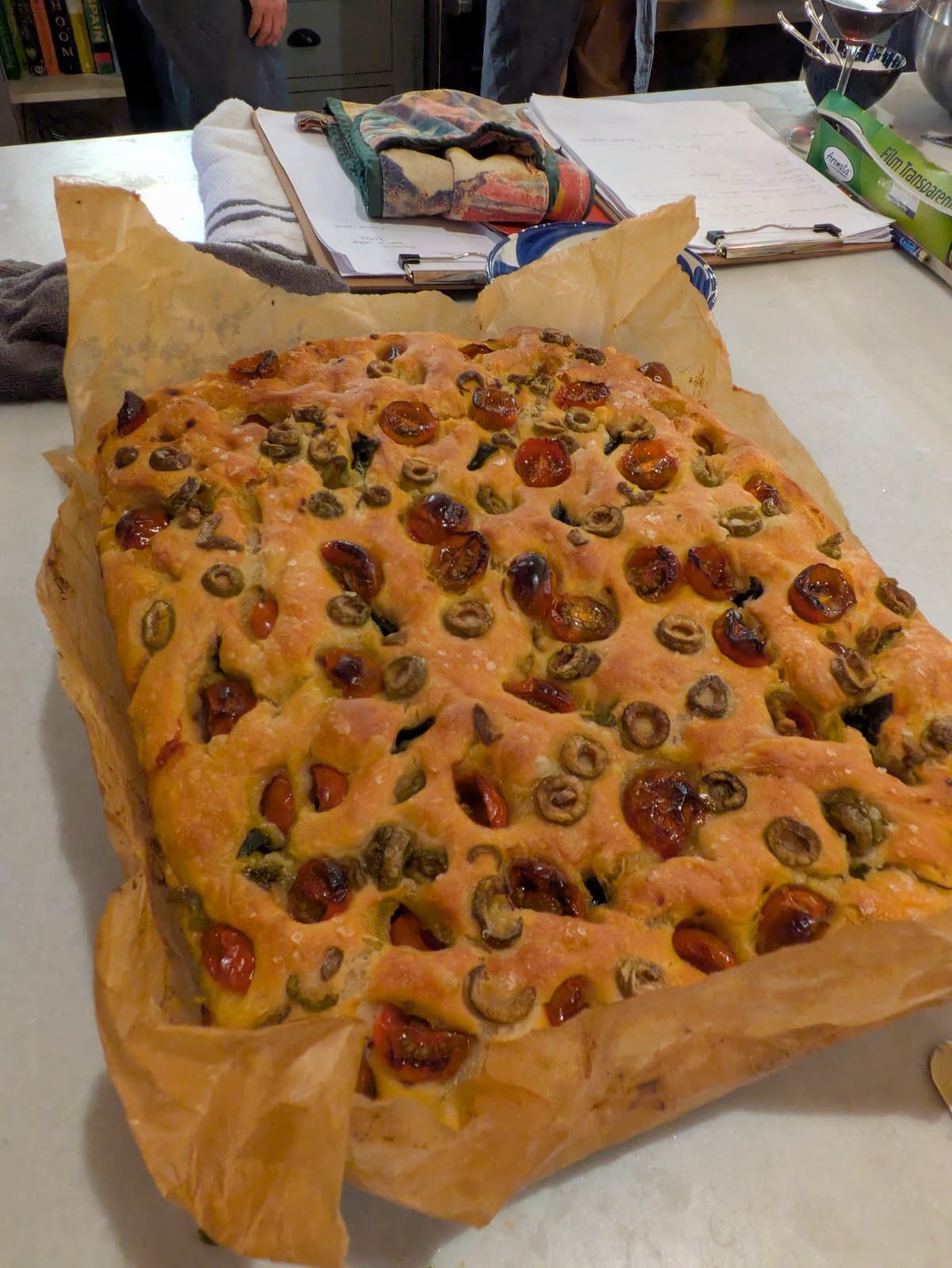
Focaccia from Bari, in Puglia, is famous for its balance of softness, and crunchiness. Remarkably, this is a peasant dish, true alchemy, taking simple, affordable ingredients and transforming them into food of the gods.
I like this recipe, because it requires minimal effort, for maximum result. Sourdough is great, but it requires more time in the kitchen, timers setup, and interruption of the evening movie. This one requires less than 15 minutes of your time, an easy bread that can really help people that don’t think that they are bakers to improve their confidence.
For me, the secret to tasty bread is working at high hydrations to give you soft fluffy bread and a crunchy crust. The second secret is in giving the water time to work on the flour on its own, allowing the gluten to align and bond. We will be looking at a more complicated bread later in the course, where we will learn some other techniques using more of our energy to ‘work’ and improve the dough.
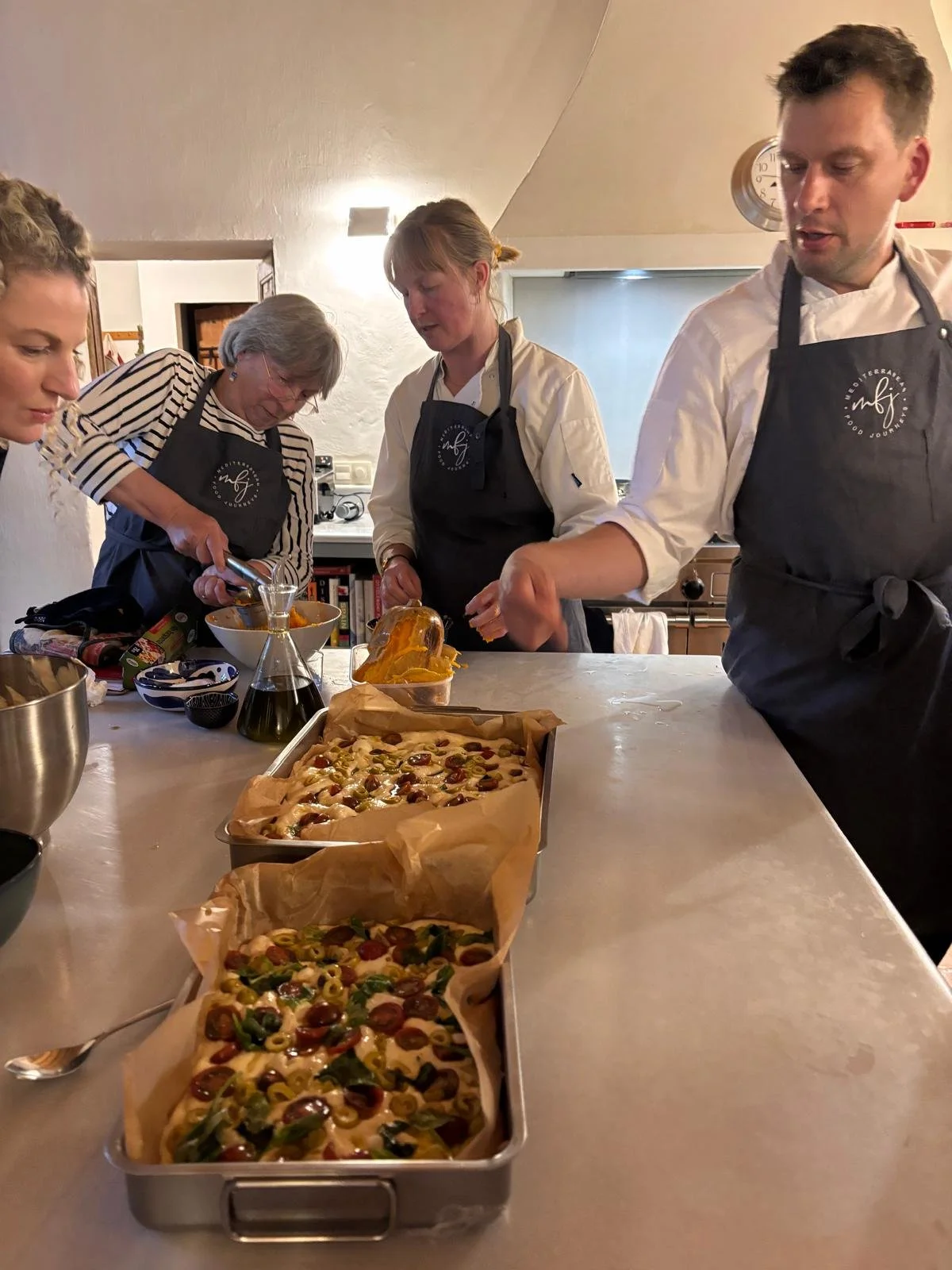
Focaccia can be cooked in a baking tray so you don’t need a fancy Dutch oven, there’s no complicated shaping or scoring, it just needs dimpling with a selection of your fingers. Traditionally a Barese is a round focaccia, but it is still edible when made in a square tray.
Ingredients (Makes 1kg loaf, serves 8)
Dough
500g Strong white bread flour
440g Warm water (mix 110g boiled water, with 330g ambient water) 88% hydration
8g Instant Dried Yeast
1 tsp Sea salt (6g)
1 + 1 tbsp Extra virgin olive oil
10g Coarse semolina, for dusting the baking dish (optional)
Bread
150g Cherry tomatoes, different colours, halved
80g Olives, pitted, halved
1 tsp Oregano
1 + 1 + 1 tbsp Extra virgin olive oil
Flaky sea salt (Maldons is my favourite)
Mix the flour with the yeast using a whisk. Whisk 1 tbsp olive oil and the salt into the warm water then mix the wet with the dry. Mix well using a dough scraper or a spatula until the dough comes together and there are no dry bits.
Rub the top of the dough with 1 tbsp extra virgin olive oil, cover with a damp tea towel, or loose cling film, transfer to the fridge and leave to rest for at least 12 hours, or up to 3 days. The longer you leave it, the more airy and sour the dough will become.
Take a 30cm round baking tray, or I like to use a round ceramic pan lined with baking parchment. Put 1 tbsp olive oil into the bottom and rub it around. Sprinkle the coarse semolina over the top.
Now take your dough from the fridge. Take the top lip of the dough and fold it up and over, tucking it over the top. Turn the dough 90 degrees and repeat the process. Continue the process with all four sides. This builds surface tension in the dough.
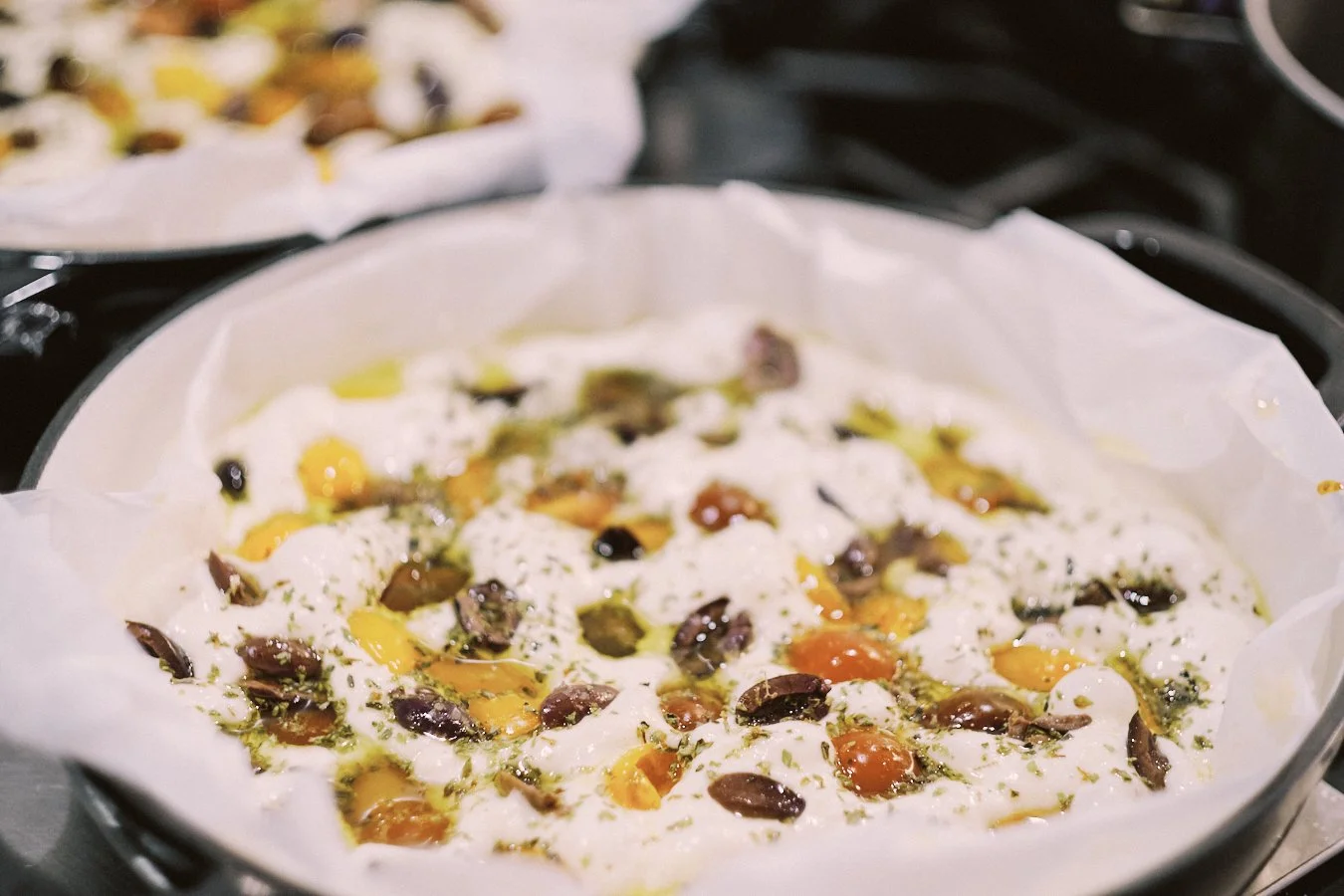
Flip the dough over, so that the seams are on the bottom. You now havec a clear top, and bottom, of the dough. Put the dough into the baking tray, and rub another 1 tbsp olive oil on top of the dough, and just leave it to rest for 1.5 - 3 hours in a warm place. The dough will spread out to the edges of the pan, the dough will rise, and bubbles will form.
Heat the oven to 220C/200C fan/425F.
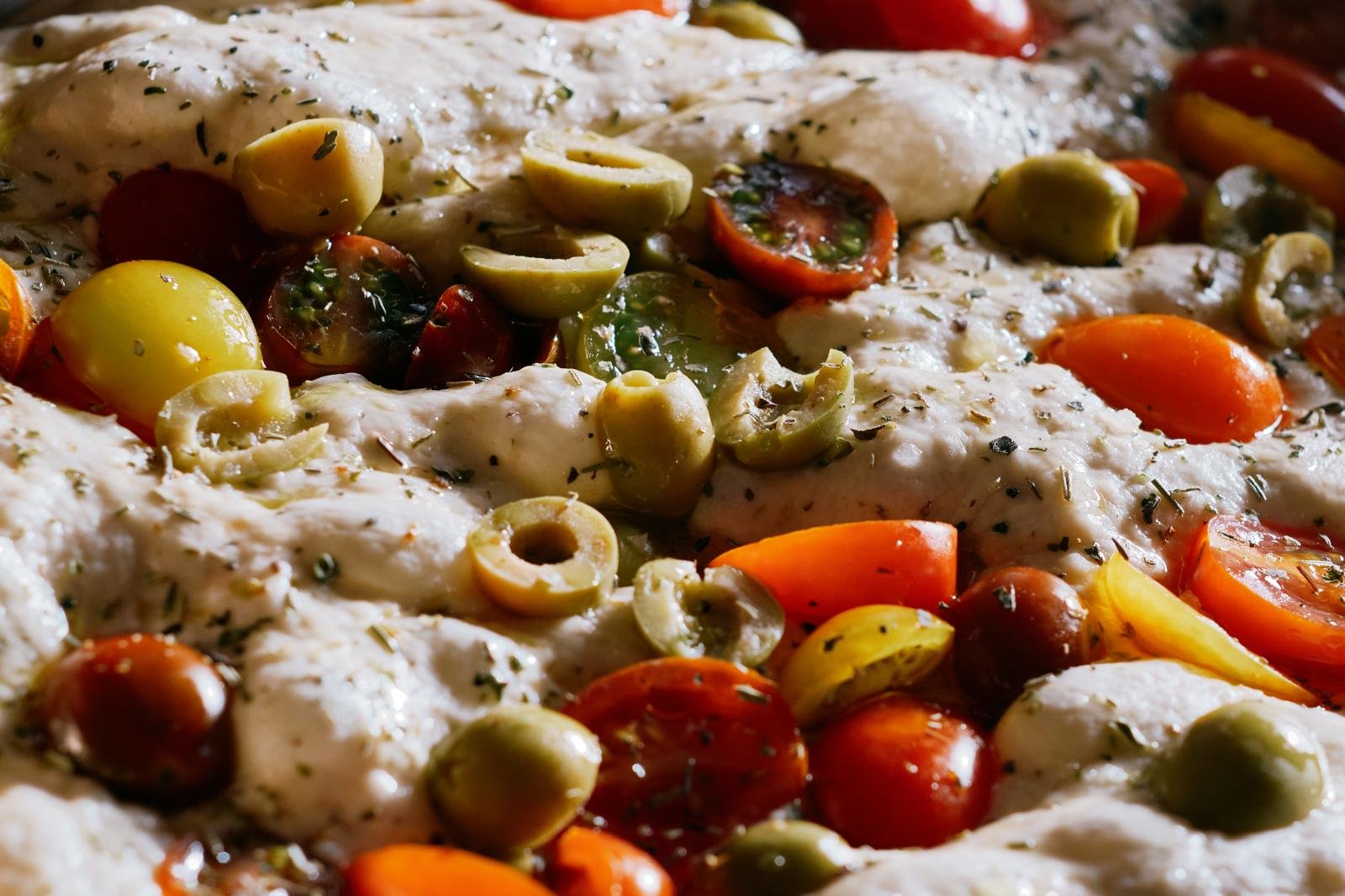
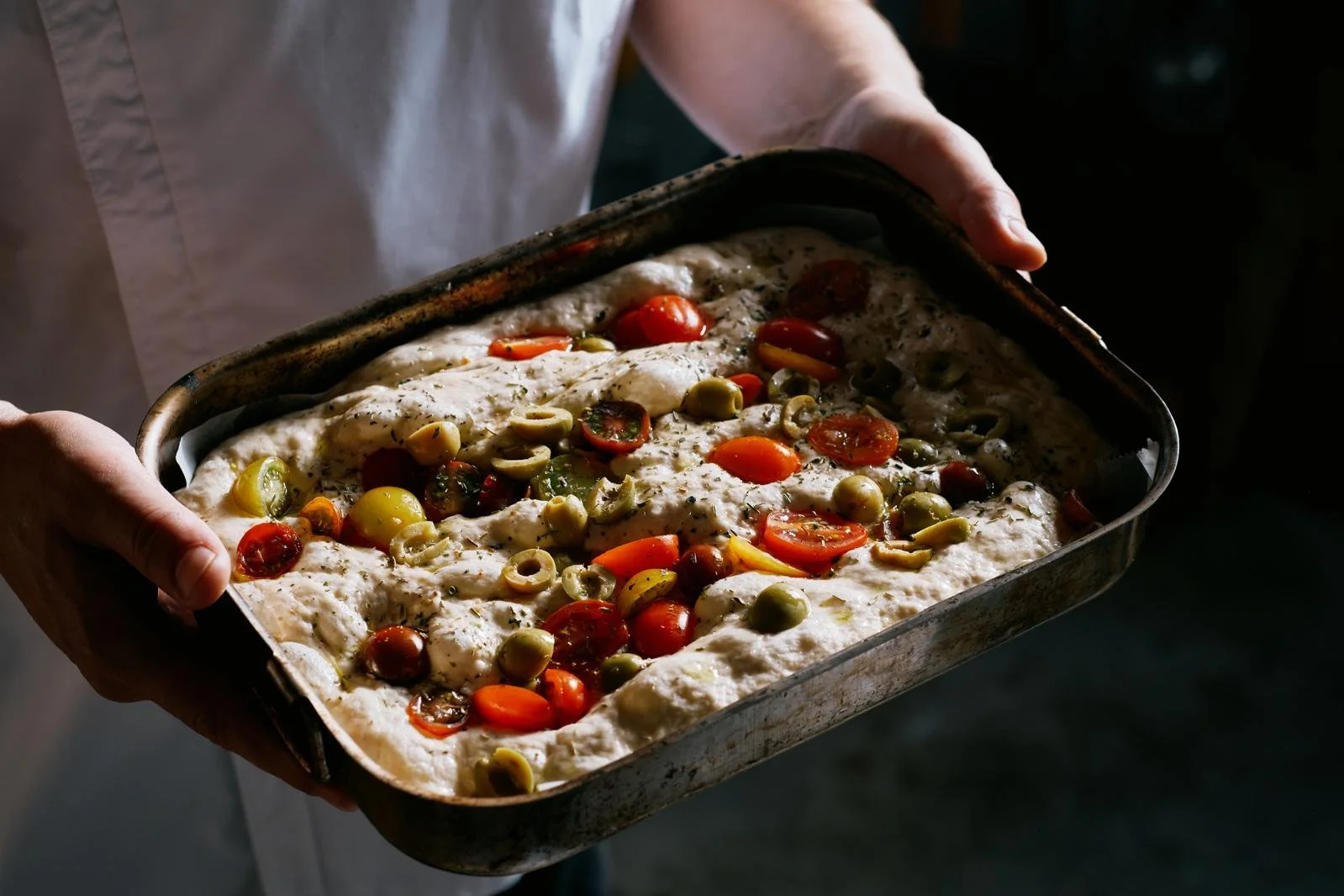
Sprinkle the oregano over the dough. Poke in the halved olives and cherry tomatoes. Pour over another (generous!) tablespoon of extra virgin olive oil, and make sure that you get some on your fingers. Then use your fingers to push dimples into the dough, to give the focaccia its characteristic shape. It may shrink back slightly as the air bubbles burst. Leave the bread to rise for another 10 minutes. Sprinkle some flaky sea salt over the top and put it in the oven to bake for 25 - 30 minutes.
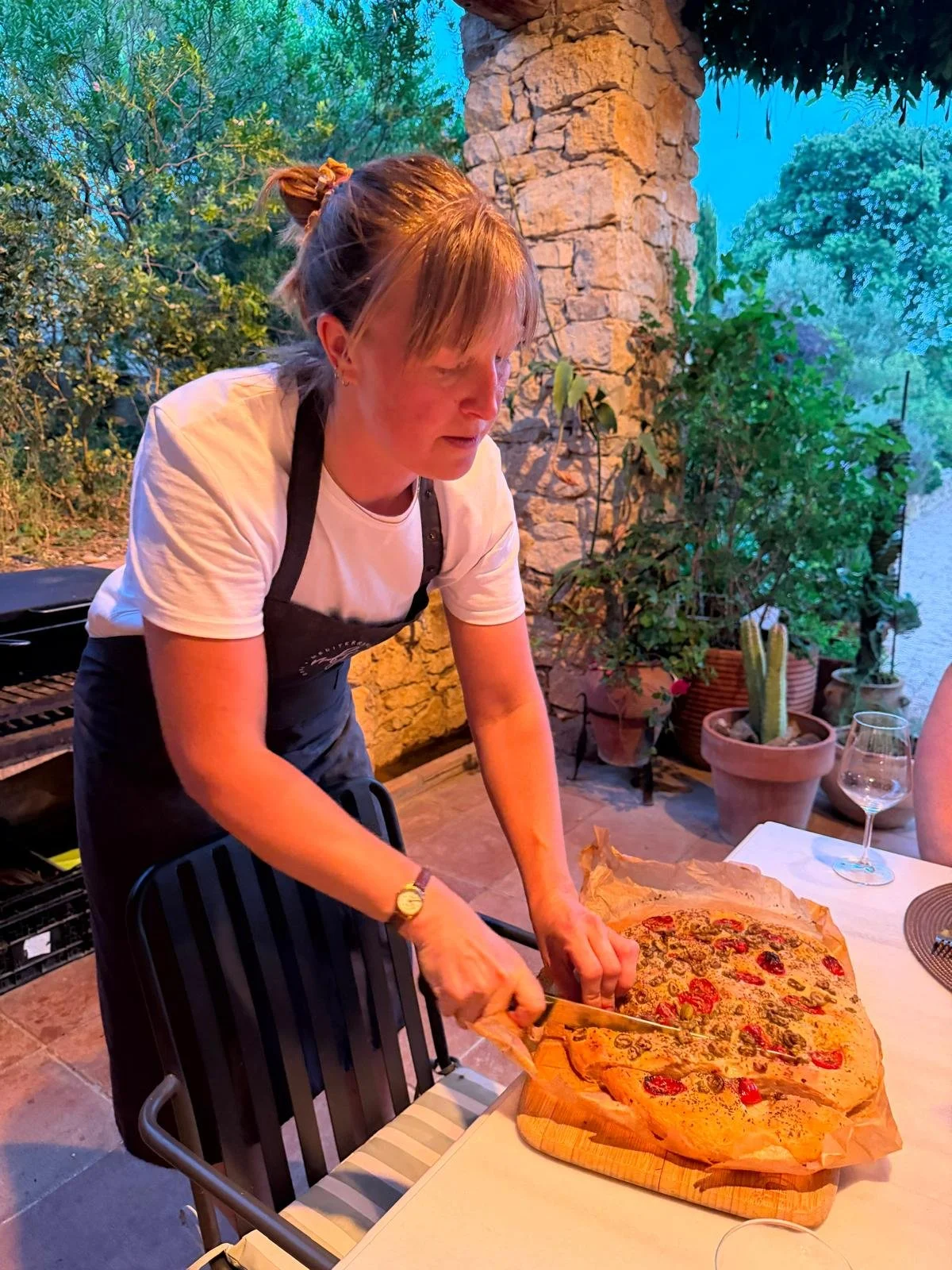
Leave to rest for 15 minutes before cutting and serving.
N.B. If you would like to make this bread tonight, rather than tomorrow, then knead or work the mixture for 5 minutes. Leave it to rise for 1.5 hours in a warm place. Shape it into your baking tray for a second rise of 30 minutes, before dimpling, resting for another 10 minutes, and baking.
N.B.2. We will be making this bread using instant yeast, but you could easily replace the yeast with 100g active sourdough culture, you will need to leave the mixture out of the fridge for 5 hours for initial bulk fermentation, before transferring to the fridge, and the secondary rise will also take 5 - 6 hours, rather than 1.5 - 3 hours.